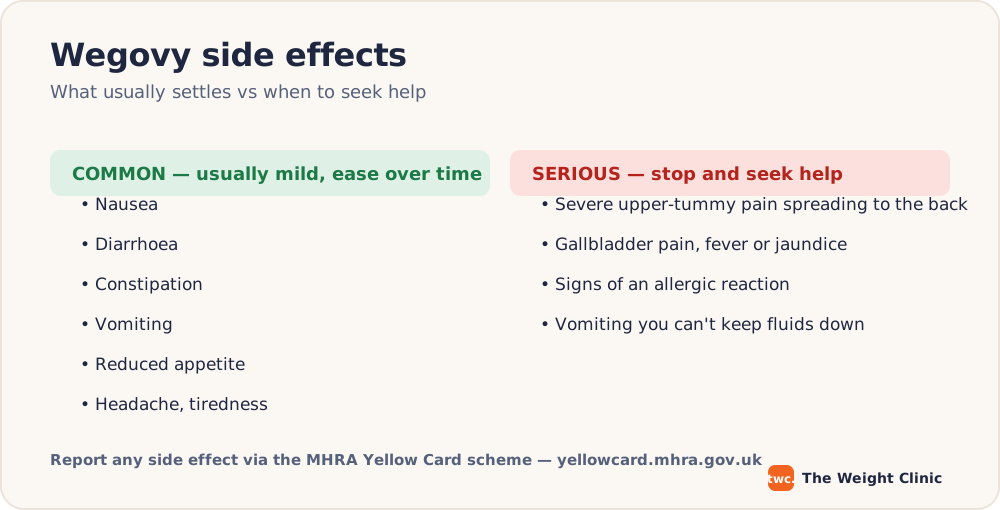
Most people who start Wegovy (semaglutide) will feel something in the first few weeks — usually a bit of nausea, sometimes looser or firmer bowels, occasionally a wave of tiredness after the weekly injection. That's expected, and for the large majority it's mild, short-lived, and fades as the body adjusts. The much rarer problems — sudden severe abdominal pain, signs of gallbladder trouble, an allergic reaction — are the ones worth learning to recognise, because those are the moments to stop and get help rather than push through.
This guide walks through both: the everyday effects you can usually manage at home, and the genuine red flags. It's written by a UK pharmacy team, and every figure is tied to a named clinical trial or the manufacturer's official product information so you can see where it comes from. Wegovy is a prescription-only medicine, licensed for weight management and supplied only after an online consultation and clinical assessment by a prescriber — this article is education, not a substitute for that assessment.
What are the most common Wegovy side effects?
Semaglutide is a GLP-1 receptor agonist. It works partly by slowing how quickly your stomach empties and by acting on appetite signals in the brain — which is exactly why the most common side effects are gut-related. When you slow the stomach down, you tend to feel it.
In the Wegovy Summary of Product Characteristics (the official MHRA-approved product document), these gastrointestinal effects are graded as very common — meaning they affect at least 1 in 10 people:
- Nausea — the single most reported effect
- Diarrhoea
- Vomiting
- Constipation
Listed as common (up to 1 in 10 people) are:
- Abdominal pain
- Indigestion (dyspepsia) and burping
- Bloating and wind
- Headache, dizziness and fatigue
- Gallstones (cholelithiasis) — more on this below
To put numbers to it: across the pooled STEP 1–3 obesity trials, gastrointestinal side effects were reported by 72.9% of people on semaglutide 2.4 mg versus 47.1% on placebo, with nausea affecting around 44% and diarrhoea around 30%. That sounds like a lot — but the same analysis found that 98% of those events were mild or moderate, and they typically settled over time. Feeling queasy in week three does not mean the medicine is "too strong" for you; it usually means it's doing what it's designed to do.
When do the side effects start and stop?
Timing follows the dose. Wegovy isn't started at the full amount — it's deliberately built up over 16 weeks so your gut has time to adapt at each step. Most people notice side effects flare in the days after each dose increase, then ease off as they settle at that level.
Here's the standard UK titration schedule from the product SmPC:
| Weeks | Weekly dose | What tends to happen |
|---|---|---|
| 1–4 | 0.25 mg | Starter dose. Mild nausea or none; appetite starts to shift |
| 5–8 | 0.5 mg | First step up — a common point for a nausea "bump" |
| 9–12 | 1.0 mg | Effects often familiar by now and more manageable |
| 13–16 | 1.7 mg | Another step up; some people feel it again briefly |
| 17+ | 2.4 mg | Full maintenance dose |
The 0.25 mg starter dose is a "getting-used-to-it" dose — it isn't expected to produce much weight loss on its own. If side effects are difficult at any step, a prescriber can hold you at your current dose for longer rather than moving up on schedule. There's no prize for rushing. Slower titration is a recognised, legitimate way to improve tolerability, and it's one of the first levers a good clinic will reach for.
For most people, the worst of it is the first 8–12 weeks. By the time you're settled on maintenance, side effects are usually much quieter. If you want a fuller sense of the timeline for results alongside side effects, our guide on how long semaglutide-class medicines take to work covers the arc from week one to month six.
How to manage the common side effects
Almost all of the everyday effects respond to simple, practical steps. None of this is exotic — it's the same advice our prescribers give patients week to week.
For nausea (the big one):
- Eat smaller portions and stop when you're comfortably satisfied, not full — pushing past that point on a slowed stomach is what triggers most nausea.
- Go easy on very fatty, fried, greasy or heavily spiced food, especially in the day or two after your injection.
- Eat slowly and don't lie down straight after eating.
- Bland, dry foods (toast, crackers) and ginger help some people.
- Sip fluids through the day rather than gulping a lot at once.
For constipation:
- Increase fibre gradually (vegetables, fruit, wholegrains) and drink more water.
- Keep moving — a daily walk genuinely helps gut transit.
- A pharmacist can recommend a suitable laxative if it persists.
For diarrhoea:
- Stay well hydrated — this is the priority.
- It often settles within a few days; if it doesn't, speak to your prescriber.
For fatigue: it's often linked to eating less overall. Make sure you're still getting enough protein and not undereating dramatically.
One safety point that ties these together: persistent vomiting or diarrhoea can cause dehydration, and the SmPC specifically warns that in rare cases this can worsen kidney function. So the everyday advice — keep your fluids up — is also a genuine safety measure, not just comfort. If you can't keep fluids down at all, that's a reason to get medical advice rather than wait it out.
Serious but rare side effects: when to worry
This is the part worth reading carefully, because knowing what these feel like is what lets you act quickly. These are uncommon, but they are the reasons to stop and seek help rather than manage at home.
Pancreatitis (inflammation of the pancreas). Listed as uncommon in the SmPC. The warning sign is severe, persistent pain in the upper abdomen that may spread through to your back, often with vomiting. This is not the mild queasiness of a dose increase — it's a different order of pain. If you get this, stop Wegovy and seek urgent medical attention.
Gallbladder problems and gallstones. Rapid or substantial weight loss — from any cause — raises the risk of gallstones, and gallstones (cholelithiasis) are listed as a common effect with Wegovy. Warning signs include pain in the upper-right abdomen, fever, yellowing of the skin or eyes (jaundice), or clay-coloured stools. Get these checked.
Dehydration and kidney problems, usually a downstream consequence of severe vomiting or diarrhoea, as covered above.
Low blood sugar (hypoglycaemia). Uncommon in people without diabetes, but the risk rises if you also take insulin or a sulfonylurea for type 2 diabetes — a prescriber should review those medicines before you start.
Serious allergic reaction. Rare, but as with any medicine: swelling of the face, lips, tongue or throat, difficulty breathing, or a widespread rash is a medical emergency — call 999.
A quick word on thyroid warnings you may have seen online: in rodent studies, GLP-1 medicines were linked to thyroid C-cell tumours, which is why Wegovy is not recommended for people with a personal or family history of medullary thyroid carcinoma or MEN 2. This is a screening question your prescriber will ask, and it's a reason the medicine is prescription-only rather than something to buy off a shelf. Wegovy is also not recommended in pregnancy or while breastfeeding — another point your prescriber will check before prescribing, and a reason to tell them straight away if you're planning to conceive or become pregnant while taking it.
As a rule of thumb: mild nausea, occasional loose stools, a bit of tiredness — manage at home and give it time. Severe abdominal pain, signs of an allergic reaction, jaundice, or inability to keep fluids down — stop and get help.
How does Wegovy compare to Mounjaro on side effects?
This is one of the most common questions we get, and the honest answer is that the two are more alike than different. Both Mounjaro (tirzepatide) and Wegovy (semaglutide) share the same GLP-1 mechanism, and both have the same headline side-effect profile: nausea, diarrhoea, constipation and the rest, worst around dose increases, settling over time.
The differences are ones of degree and expectation, not of kind. Mounjaro acts on two gut-hormone pathways (GIP as well as GLP-1) and produced greater average weight loss in trials — around 22.5% mean weight loss at the highest dose in SURMOUNT-1 (tirzepatide 15 mg, 72 weeks), compared with the roughly 14.9% seen with Wegovy in STEP-1 (semaglutide 2.4 mg, 68 weeks). Both trials also delivered lifestyle support alongside the medicine, and — importantly — results vary from person to person; not everyone reaches these averages, and these were trial populations, not a promise.
What matters for your experience is that side effects are highly individual. Some people sail through Wegovy and struggle with Mounjaro; for others it's the reverse. The "gentler" option isn't the same for everyone. If you're weighing the two up properly, our detailed Mounjaro vs Wegovy comparison breaks down efficacy, dosing, tolerability and cost side by side.
How it works at The Weight Clinic
The Weight Clinic is a UK pharmacy registered with the General Pharmaceutical Council. Our clinical team includes Superintendent Pharmacist Andrew Lane (GPhC 2027876) and Pharmacist Independent Prescriber Fatma Al Sibahi (GPhC 2232235), so the person reviewing your consultation is a qualified prescriber — not an algorithm.
Because side effects are so tied to titration, we don't just post out a pen and wish you luck. Your consultation captures your medical history, current medicines and any red-flag conditions, a prescriber reviews it before anything is dispensed, and if you're finding a dose step difficult, we can hold you where you are rather than push on. Under the medicine's UK licence, a prescriber can consider Wegovy for adults with a BMI of 30 or above, or 27 or above with a weight-related condition such as high blood pressure or type 2 diabetes — though meeting the threshold is a starting point, not an automatic yes.
The eligibility check is free, takes a few minutes, and there's no subscription — you're not locked into anything. Wegovy starts from £115 a month, and if injections aren't for you, we also offer the oral semaglutide tablet and Mounjaro.
Check your eligibility — it's free, and a prescriber reviews every consultation.
Reporting side effects: the Yellow Card scheme
If you experience a side effect with Wegovy — or any medicine — you can report it directly to the UK regulator, the Medicines and Healthcare products Regulatory Agency (MHRA), through the Yellow Card scheme. Anyone can report — patients as well as healthcare professionals — and you don't need to be certain the medicine caused it. These reports are how emerging safety signals get picked up, so it genuinely matters. You should also tell your prescriber, so your care can be adjusted. Always keep your Wegovy in the fridge between 2°C and 8°C before first use; once in use, the pen can be kept below 30°C for up to 28 days, and it should never be frozen, as noted in the product information.
Frequently asked questions
How long do Wegovy side effects last? For most people, side effects are worst in the first 8–12 weeks and around each dose increase, then ease as the body adapts. In the STEP trials, the large majority of gastrointestinal effects were mild or moderate and short-lived. If a side effect is severe, worsening, or simply not settling, speak to your prescriber — the dose can often be held or adjusted.
Does everyone get nausea on Wegovy? No. Nausea is the most common side effect and affected roughly 44% of people on the full dose in pooled STEP trial data — but that means over half didn't report it, and where it does occur it's usually mild. Slower dose titration, smaller portions and avoiding fatty foods all reduce it.
Are Wegovy side effects worse than Mounjaro? They're broadly similar — both are GLP-1 medicines with the same gut-related side effects. Which one an individual tolerates better is genuinely unpredictable and varies person to person. Our Mounjaro vs Wegovy guide compares them in detail.
Can I do anything to reduce Wegovy side effects? Yes — eat smaller portions and stop when satisfied, avoid greasy and very fatty food (especially after your injection), eat slowly, stay well hydrated, and increase fibre gradually to help constipation. If a dose step is hard, a prescriber can keep you at your current dose for longer instead of stepping up.
When should I stop Wegovy and see a doctor? Stop and seek urgent help for severe, persistent upper-abdominal pain that may spread to your back (possible pancreatitis), signs of gallbladder problems (upper-right pain, fever, jaundice), inability to keep fluids down, or any sign of a serious allergic reaction (facial or throat swelling, difficulty breathing) — call 999 for the latter.
Is it safe to buy Wegovy without a consultation? No — Wegovy is a prescription-only medicine and should only be supplied after an online consultation and clinical assessment by a registered prescriber, who screens for the contraindications and red-flag conditions that make it unsafe for some people. Buying it without that assessment skips the checks that keep it safe.
Frequently asked questions
How long do Wegovy side effects last?
For most people, side effects are worst in the first 8–12 weeks and around each dose increase, then ease as the body adapts. In the STEP trials, the large majority of gastrointestinal effects were mild or moderate and short-lived. If a side effect is severe, worsening, or simply not settling, speak to your prescriber — the dose can often be held or adjusted.
Does everyone get nausea on Wegovy?
No. Nausea is the most common side effect and affected roughly 44% of people on the full dose in pooled STEP trial data — but that means over half didn't report it, and where it does occur it's usually mild. Slower dose titration, smaller portions and avoiding fatty foods all reduce it.
Are Wegovy side effects worse than Mounjaro?
They're broadly similar — both are GLP-1 medicines with the same gut-related side effects. Which one an individual tolerates better is genuinely unpredictable and varies person to person. Our Mounjaro vs Wegovy guide compares them in detail.
Can I do anything to reduce Wegovy side effects?
Yes — eat smaller portions and stop when satisfied, avoid greasy and very fatty food (especially after your injection), eat slowly, stay well hydrated, and increase fibre gradually to help constipation. If a dose step is hard, a prescriber can keep you at your current dose for longer instead of stepping up.
When should I stop Wegovy and see a doctor?
Stop and seek urgent help for severe, persistent upper-abdominal pain that may spread to your back (possible pancreatitis), signs of gallbladder problems (upper-right pain, fever, jaundice), inability to keep fluids down, or any sign of a serious allergic reaction (facial or throat swelling, difficulty breathing) — call 999 for the latter.
Is it safe to buy Wegovy without a consultation?
No — Wegovy is a prescription-only medicine and should only be supplied after an online consultation and clinical assessment by a registered prescriber, who screens for the contraindications and red-flag conditions that make it unsafe for some people. Buying it without that assessment skips the checks that keep it safe.