If you've been reading about weight-loss injections, two names keep coming up: Mounjaro and Wegovy. They're often mentioned in the same breath, which makes it easy to assume they're more or less interchangeable. They aren't. They contain different medicines, work through slightly different mechanisms, come at different price points, and were tested in different trials on different groups of people.
Here's the short version. Mounjaro (the active ingredient is tirzepatide) acts on two gut hormone receptors; Wegovy (the active ingredient is semaglutide) acts on one. In their respective headline trials, the higher dose of tirzepatide produced a larger average weight loss than the higher dose of semaglutide. Both are prescription-only medicines in the UK, and neither is a shortcut you can pick up over the counter — both are only supplied after an online consultation and a clinical assessment by a prescriber.
The rest of this article is the detail that helps you choose: what the trials really showed, how the side-effect profiles compare, what the dosing looks like week to week, and what each one costs. We'll keep the claims tied to named studies and resist declaring a single "winner," because the honest answer depends on you.
What's actually in each injection?
This is where the real difference lives, so it's worth being precise.
Wegovy contains semaglutide. Semaglutide is a GLP-1 receptor agonist — it mimics a natural gut hormone called glucagon-like peptide-1, which your body releases after you eat. GLP-1 does several useful things at once: it slows how quickly your stomach empties, signals fullness to the brain, and helps regulate blood sugar. The net effect for most people is reduced appetite and smaller portions without the constant background hunger that makes dieting so hard to sustain.
Mounjaro contains tirzepatide. Tirzepatide is a dual agonist: it activates the same GLP-1 receptor and a second one called GIP (glucose-dependent insulinotropic polypeptide). GIP is another hormone involved in how the body handles food and energy. The working theory is that hitting two receptors rather than one produces a stronger overall effect on appetite and metabolism — and the trial data, which we'll get to, is consistent with that idea.
So the cleanest way to hold it in your head: Wegovy is single-action (GLP-1); Mounjaro is dual-action (GIP + GLP-1). That single structural difference is the reason most of the other differences exist.
You may also see Ozempic and Saxenda mentioned. Ozempic contains the same molecule as Wegovy (semaglutide) but is licensed for type 2 diabetes, not weight management. Saxenda contains liraglutide, an older, shorter-acting daily GLP-1 injection. For weight management, the UK conversation has narrowed to Mounjaro and Wegovy, which is why they're the focus here. For the wider picture, our guide to weight-loss injections covers the full family.
Mounjaro vs Wegovy: the head-to-head
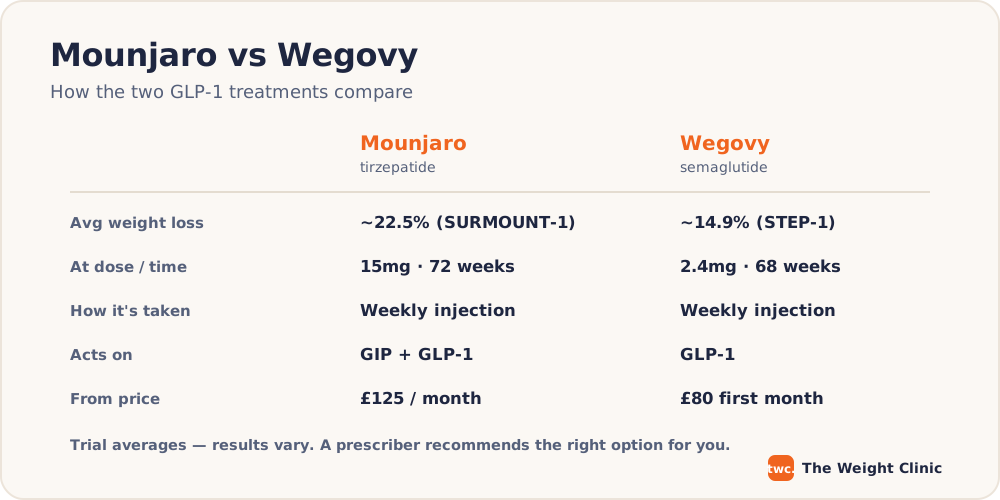
Here's the comparison at a glance. Read the notes underneath the table — they matter as much as the numbers.
| Mounjaro (tirzepatide) | Wegovy (semaglutide) | |
|---|---|---|
| Drug class | Dual GIP + GLP-1 receptor agonist | GLP-1 receptor agonist |
| How it's taken | Once-weekly injection (pre-filled pen) | Once-weekly injection (pre-filled pen) |
| Headline trial | SURMOUNT-1 | STEP-1 |
| Trial dose & length | 15 mg, 72 weeks | 2.4 mg, 68 weeks |
| Average weight loss in that trial | ~20.9–22.5% at the top dose, analysis-dependent (results vary; not everyone reaches this; alongside a reduced-calorie diet and increased activity) | ~14.9% at the top dose (results vary; not everyone reaches this; alongside a reduced-calorie diet and increased activity) |
| Common side effects | Nausea, diarrhoea, constipation, reduced appetite | Nausea, diarrhoea, constipation, reduced appetite |
| Dose titration | Started low, stepped up over months | Started low, stepped up over months |
| UK price at The Weight Clinic | From £160/month | From £115/month |
| Availability | Prescription-only, after online consultation & clinical assessment | Prescription-only, after online consultation & clinical assessment |
A word on that trial column, because it's the part most comparison articles get wrong: SURMOUNT-1 and STEP-1 were separate studies. They enrolled different participants, ran for slightly different lengths, and were never designed to be compared side by side. So while the figures are real and both come from large, peer-reviewed, placebo-controlled trials, you can't cleanly say "Mounjaro beats Wegovy by 7.6 percentage points" from these numbers alone — that would be comparing across two trials that weren't set up for it. The fairer statement is that each medicine produced a substantial average weight loss in its own trial, and tirzepatide's top-dose figure was the higher of the two.
What the trials actually showed
Let's put proper context around those percentages, because "22.5%" and "14.9%" are easy to quote and easy to misunderstand.
Mounjaro — SURMOUNT-1. This studied tirzepatide over 72 weeks in adults with obesity (or overweight with a weight-related condition) without type 2 diabetes. At the highest 15 mg dose, participants lost an average of about 20.9% of their body weight on the treatment-regimen estimand, rising to roughly 22.5% on the efficacy estimand (people who stayed on treatment as intended) — versus about 2–3% on placebo. As with every figure here, results vary, not everyone reaches these numbers, and the loss was achieved alongside a reduced-calorie diet and increased physical activity.
Wegovy — STEP-1. This studied semaglutide 2.4 mg over 68 weeks in adults with overweight or obesity. Participants on the active drug lost an average of about 14.9% of their body weight, versus roughly 2.4% on placebo, and around 86% lost at least 5% — the threshold clinicians regard as clinically meaningful. Again, results vary, not everyone reaches this figure, and it was achieved alongside a reduced-calorie diet and increased activity.
Two honest caveats sit over both sets of numbers:
- These are averages, and results vary. Some people in each trial lost far more than the headline figure; others lost much less; a minority barely responded. An average is a useful guide, not a promise. Nobody can tell you in advance exactly what number you'll land on.
- The medicine did the work alongside lifestyle changes. Everyone in both trials also received support with a reduced-calorie diet and increased physical activity. The injection reduces appetite and makes eating less feel achievable — it doesn't replace the changes underneath.
You can read more about each medicine on our dedicated Mounjaro and Wegovy pages.
How do the side effects compare?
This is often the deciding factor, and the reassuring news is that the two medicines have broadly similar side-effect profiles — which makes sense, given they share the GLP-1 mechanism. But no effective medicine is without risk, so here is the balanced picture.
Common side effects (affecting a meaningful share of users, especially early on and when the dose steps up) are mostly gastrointestinal:
- Nausea
- Diarrhoea
- Constipation
- Vomiting
- Indigestion or reflux
- Reduced appetite (this one is, of course, partly the point)
These tend to be worst in the first few weeks and after each dose increase, and they usually settle as the body adjusts. The slow-titration schedule — starting low and building up over months — exists precisely to keep these manageable rather than overwhelming. Eating smaller, lower-fat meals and stopping when comfortably full helps a lot.
Serious but rare side effects deserve equal honesty, because "usually mild" is not the same as "always safe":
- Acute pancreatitis (inflammation of the pancreas). The MHRA describes this as a known but infrequent effect of GLP-1 medicines, with rare severe or necrotising cases. The red flag is severe, persistent abdominal pain, particularly pain that radiates through to the back — if you experience this, stop the medicine and seek urgent medical care.
- Gallbladder problems, including gallstones — rapid weight loss of any kind raises this risk, and these medicines are no exception.
- Dehydration from prolonged vomiting or diarrhoea, which can in turn affect the kidneys.
- Low blood sugar (hypoglycaemia), more relevant if you also take insulin or certain diabetes medicines.
There are also situations where these medicines are not suitable. They must not be used in pregnancy or while breastfeeding, and they are contraindicated in anyone with a personal or family history of medullary thyroid carcinoma (a specific type of thyroid cancer) or the MEN 2 syndrome (multiple endocrine neoplasia type 2). A history of pancreatitis, and various other conditions, also need careful review. A prescriber checks all of this before anything is supplied, which is the whole point of the clinical assessment.
If you ever experience a side effect from any medicine, you can report it directly to the UK regulator — the Medicines and Healthcare products Regulatory Agency (MHRA) — through the MHRA Yellow Card scheme at yellowcard.mhra.gov.uk. It's a genuinely useful national safety system, and patient reports feed into it.
What about dosing and how long it takes?
Both medicines are once-weekly injections given with a pre-filled pen — a small needle into the fat under the skin of the abdomen, thigh or upper arm. Neither is a daily commitment, and neither involves anything more complicated than a quick self-injection you'll be shown how to do.
Both also follow a step-up (titration) schedule rather than starting at the full dose. You begin on a low introductory dose for several weeks, then increase in stages over the following months towards a maintenance dose, guided by how you respond and how well you tolerate each step. This gradual build is deliberate: it gives your gut time to adapt and keeps the nausea and other early effects to a minimum.
Because of that ramp-up, weight loss is a slow burn, not an overnight switch. Most people notice appetite changes within the first few weeks, but the meaningful figures came after many months of consistent use — 68 weeks for STEP-1, 72 weeks for SURMOUNT-1. Both reward a steady change over the better part of a year rather than a fortnight, and even then results vary from person to person.
One practical note on the current UK landscape: there's now also an oral form of semaglutide on the horizon for weight management — a tablet rather than an injection. If needles are your sticking point, it's worth reading about the Wegovy pill. And a newer oral option, orforglipron, is covered on our Foundayo page.
Which one is right for you?
Here's the part where a lot of articles pretend to have a universal answer. We won't, because there isn't one. But there are sensible ways to think about it.
Mounjaro's top-dose trial figure was the higher of the two (results vary, and not everyone reaches it), and its dual mechanism is genuinely novel — so if maximising the average expected weight loss is your priority and the higher monthly cost works for you, it's an obvious candidate. Wegovy has the longer track record as the first of this generation licensed specifically for weight management in the UK, an enormous evidence base, and a lower entry cost, which matters if you want to start without a big initial outlay.
But the real deciding factors are individual: your starting weight and BMI, medical history, other medicines you take, how you tolerate early side effects, your budget, and availability. Two people with the same goal can be pointed towards different medicines for good reasons. That's the judgement a prescriber is there to make with you — not something to reverse-engineer from a comparison table.
If you're weighing up the options more broadly, our treatments overview lays out everything side by side.
Who is eligible — the licensing vs NHS-funding picture
It helps to separate two different thresholds that often get muddled.
The MHRA licence (and general private eligibility). Both tirzepatide (Mounjaro) and semaglutide (Wegovy) are licensed by the MHRA for weight management in adults with a BMI of 30 or above, or 27 or above with a weight-related health condition such as type 2 diabetes or high blood pressure (a slightly lower threshold can apply for some ethnic backgrounds, who tend to face weight-related health risks at a lower BMI). These are the thresholds a private prescriber — including The Weight Clinic — generally works to, subject to your full medical history.
The NICE (NHS-funding) bar is different and stricter. NICE guidance governs when the NHS will fund these medicines, not whether they are licensed. For tirzepatide, NICE TA1026 recommends NHS-funded treatment only for a BMI of 35 or above (or 32.5 or above for people from South Asian, Chinese, other Asian, Middle Eastern, Black African or African-Caribbean backgrounds) plus at least one weight-related comorbidity, rolled out to the NHS in phases. For semaglutide, NICE TA875 recommends it for a BMI of 35 or above, or 30–34.9 within a specialist weight-management service, for a maximum of two years. So the NHS-funding criteria are notably higher than the licensed thresholds a private service can prescribe within — which is why many people who don't qualify for NHS funding can still be assessed privately.
How it works at The Weight Clinic
The Weight Clinic is a UK private prescribing service operating under the MHRA marketing authorisation for these medicines, with treatment overseen by our clinical team, including Superintendent Pharmacist Andrew Lane and Pharmacist Independent Prescriber Fatma Al Sibahi. Neither Mounjaro nor Wegovy is available to simply add to a basket — both are prescription-only, and both are supplied only after you complete an online consultation and a prescriber has reviewed your assessment and confirmed a medicine is appropriate and safe for you.
The process: a free eligibility check, a short online health questionnaire, then a clinical review by one of our prescribers. If a treatment is right for you, it's dispensed and delivered — with no subscription and no lock-in. Pricing is transparent: Wegovy from £115 a month and Mounjaro from £160 a month, plus £5 tracked delivery per order.
The best next step isn't to guess which medicine suits you — it's to find out whether either is even suitable in the first place. That takes a few minutes and costs nothing.
Check your eligibility — free, with no obligation to go ahead.
Frequently asked questions
Is Mounjaro better than Wegovy?
In its main trial (SURMOUNT-1), the top dose of Mounjaro produced a higher average weight loss (~20.9–22.5%, analysis-dependent) than the top dose of Wegovy did in its main trial (STEP-1, ~14.9%). Results vary hugely between individuals, not everyone reaches these figures, and both were achieved alongside a reduced-calorie diet and increased activity. These were also separate trials on different people, so it's not a clean head-to-head. "Better" further depends on your medical history, tolerance of side effects, budget and what a prescriber judges suitable for you. Neither is universally the right answer.
Can I buy Mounjaro or Wegovy without a prescription?
No. Both are prescription-only medicines in the UK. They can only be supplied after an online consultation and a clinical assessment by a prescriber, who checks your suitability first. Any service offering them without a prescription is not operating legally or safely, and you can report concerns to the MHRA.
What are the most common side effects?
For both medicines, the most common effects are gastrointestinal: nausea, diarrhoea, constipation, vomiting and reduced appetite. These are usually worst in the first weeks and after each dose increase, and tend to ease as your body adjusts. Rare but serious effects include acute pancreatitis (a known but infrequent effect) and gallbladder problems — seek urgent medical advice for severe, persistent abdominal pain that radiates to the back. You can report any suspected side effect via the MHRA Yellow Card scheme at yellowcard.mhra.gov.uk.
How much do Mounjaro and Wegovy cost at The Weight Clinic?
Wegovy starts from £115 a month and Mounjaro from £160 a month, plus £5 tracked delivery per order. There's no subscription, and the eligibility check is free.
How quickly will I lose weight?
Slowly and steadily, not overnight. Most people notice appetite changes within a few weeks, but the meaningful weight loss seen in the trials came after many months of consistent use — 68 weeks in the Wegovy trial and 72 weeks in the Mounjaro trial. The dose is also built up gradually over months. Results vary, not everyone reaches the trial figures, and the medicine works alongside a reduced-calorie diet and increased activity, not instead of them.
Am I eligible for these medicines?
Both medicines are licensed by the MHRA for weight management at a BMI of 30 or above, or 27 or above with a weight-related health condition such as type 2 diabetes or high blood pressure (slightly lower for some ethnic backgrounds). Those are the thresholds a private prescriber generally works to. NHS funding is a separate, stricter matter — NICE requires a higher BMI (for example 35 or above for tirzepatide under TA1026) plus a comorbidity. Eligibility isn't only about BMI, either — your full medical history matters. The quickest way to know is to complete a free eligibility check and let a prescriber review it.
---
This article is for general information and does not replace personalised medical advice. Mounjaro and Wegovy are prescription-only medicines, supplied in the UK only after an online consultation and clinical assessment by a prescriber. Weight-loss results vary between individuals and are achieved alongside a reduced-calorie diet and increased activity. Report any suspected side effect via the MHRA Yellow Card scheme at yellowcard.mhra.gov.uk.
Frequently asked questions
Is Mounjaro better than Wegovy?
In its main trial (SURMOUNT-1), the top dose of Mounjaro produced a higher average weight loss (~20.9-22.5%, analysis-dependent) than the top dose of Wegovy did in its main trial (STEP-1, ~14.9%). Results vary hugely between individuals, not everyone reaches these figures, and both were achieved alongside a reduced-calorie diet and increased activity. These were also separate trials on different people, so it is not a clean head-to-head. Which is better further depends on your medical history, tolerance of side effects, budget and what a prescriber judges suitable for you. Neither is universally the right answer.
Can I buy Mounjaro or Wegovy without a prescription?
No. Both are prescription-only medicines in the UK. They can only be supplied after an online consultation and a clinical assessment by a prescriber, who checks your suitability first. Any service offering them without a prescription is not operating legally or safely, and you can report concerns to the MHRA.
What are the most common side effects of Mounjaro and Wegovy?
For both medicines, the most common effects are gastrointestinal: nausea, diarrhoea, constipation, vomiting and reduced appetite. These are usually worst in the first weeks and after each dose increase, and tend to ease as your body adjusts. Rare but serious effects include acute pancreatitis (a known but infrequent effect) and gallbladder problems - seek urgent medical advice for severe, persistent abdominal pain that radiates to the back. You can report any suspected side effect via the MHRA Yellow Card scheme at yellowcard.mhra.gov.uk.
How much do Mounjaro and Wegovy cost at The Weight Clinic?
Wegovy starts from £115 a month and Mounjaro from £160 a month, plus £5 tracked delivery per order. There is no subscription, and the eligibility check is free.
How quickly will I lose weight on Mounjaro or Wegovy?
Slowly and steadily, not overnight. Most people notice appetite changes within a few weeks, but the meaningful weight loss seen in the trials came after many months of consistent use - 68 weeks in the Wegovy trial and 72 weeks in the Mounjaro trial. The dose is also built up gradually over months. Results vary, not everyone reaches the trial figures, and the medicine works alongside a reduced-calorie diet and increased activity, not instead of them.
Am I eligible for Mounjaro or Wegovy?
Both medicines are licensed by the MHRA for weight management at a BMI of 30 or above, or 27 or above with a weight-related health condition such as type 2 diabetes or high blood pressure (slightly lower for some ethnic backgrounds). Those are the thresholds a private prescriber generally works to. NHS funding is a separate, stricter matter - NICE requires a higher BMI (for example 35 or above for tirzepatide under TA1026) plus a comorbidity. Eligibility is not only about BMI, either - your full medical history matters. The quickest way to know is to complete a free eligibility check and let a prescriber review it.