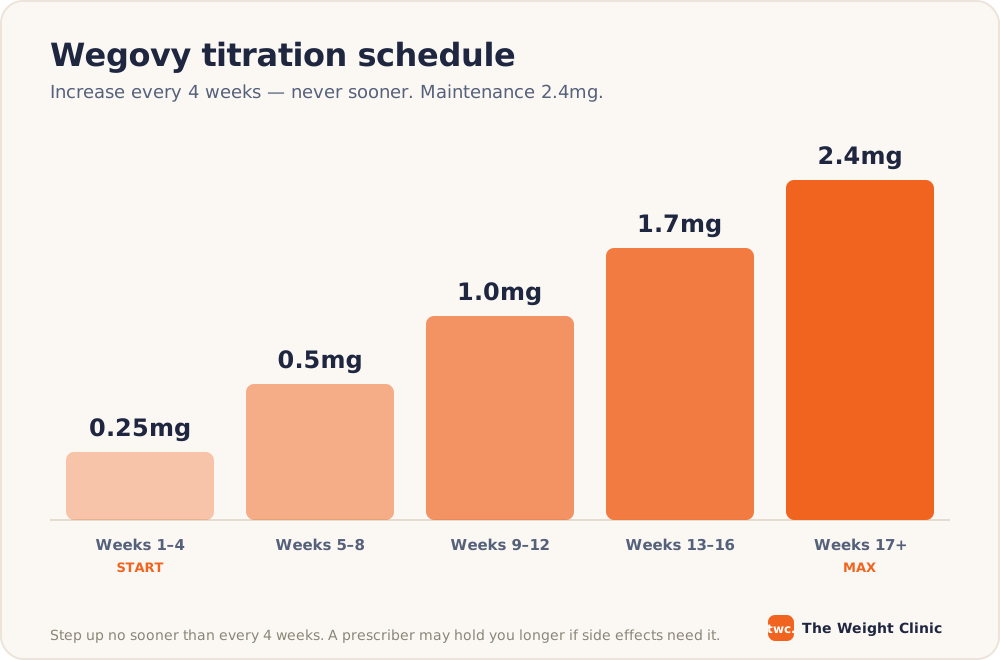
Wegovy is not a fixed-strength medicine you inject at full power from day one. It follows a stepped schedule: you start at 0.25 mg once a week and climb, one increment at a time, over roughly four months until you reach the maintenance dose of 2.4 mg. That slow build is the single most important thing to understand before your first injection, because it explains why the early weeks feel underwhelming and why rushing almost always backfires.
This guide walks through the full semaglutide titration schedule week by week, explains what each step is doing, and covers the practical questions people actually ask: what to do about side effects, what happens if you miss a week, and whether you can stay on a lower dose. Every number here comes from the manufacturer's licensed prescribing information and named clinical trials, not from marketing copy.
The Wegovy titration schedule at a glance
Wegovy (the brand name for injectable semaglutide) reaches its full maintenance strength through a fixed four-step escalation. Each dose is held for four weeks before the next increase, so it takes 16 weeks to arrive at the standard maintenance dose of 2.4 mg once weekly.
| Phase | Weekly dose | Duration | What it's for |
|---|---|---|---|
| Step 1 | 0.25 mg | Weeks 1–4 | Introducing the drug; almost no weight-loss effect expected |
| Step 2 | 0.5 mg | Weeks 5–8 | Building tolerance; appetite changes often start |
| Step 3 | 1 mg | Weeks 9–12 | Therapeutic range begins |
| Step 4 | 1.7 mg | Weeks 13–16 | Approaching full strength |
| Maintenance | 2.4 mg | From week 17, after the 16-week climb | The licensed weight-loss dose used long term |
This schedule is set out in the Wegovy Summary of Product Characteristics, the legally approved prescribing document reviewed by the Medicines and Healthcare products Regulatory Agency. The 0.25 mg and 0.5 mg strengths are deliberately sub-therapeutic — they exist to let your body adjust, not to shift the scales.
One important nuance: the schedule above is a target, not a rigid timetable. If a given step is not comfortable, your prescriber can hold you there longer or step you back down before trying again. More on that below.
Why Wegovy starts so low and climbs so slowly
Semaglutide works by mimicking GLP-1 (glucagon-like peptide-1), a gut hormone your body releases after eating. It acts on appetite centres in the brain to reduce hunger and slows the rate at which the stomach empties, so you feel full sooner and for longer. Those same actions are what cause the medicine's most common side effects — nausea, reflux, constipation and, less often, vomiting or diarrhoea.
Introduce a full 2.4 mg dose on day one and the gastrointestinal system has no time to adapt. The result for most people would be several days of genuine misery, and the main reason patients abandon GLP-1 treatment is early, poorly managed side effects rather than any lack of effect. The gentle climb spreads that adjustment over months. By the time you reach a dose that meaningfully suppresses appetite, your gut has already learned to tolerate the mechanism behind it.
There is no evidence that jumping ahead speeds up your results. The weight loss seen in trials was achieved on this exact escalation schedule, and starting higher simply trades tolerability for no additional benefit. Titration is a safety and adherence strategy, not a delaying tactic.
What each step actually does
Weeks 1–4 (0.25 mg). This is the introductory dose. Most people notice very little change to appetite and little or no movement on the scales, which is entirely expected. If you feel some early nausea, that is the drug taking effect, not a problem with the dose. The job of this phase is simply to get the medicine into your system without a rough landing.
Weeks 5–8 (0.5 mg). The first dose where many people report a shift in "food noise" — the background chatter of cravings and preoccupation with the next meal starts to quieten. Appetite at meals may drop. Side effects can flare briefly for a few days after each increase, then settle.
Weeks 9–12 (1 mg). You are now in the therapeutic range. Meaningful appetite suppression is common at this level, and steadier weight loss often begins for those who did not see much earlier.
Weeks 13–16 (1.7 mg). The last stop before maintenance. If you are tolerating this dose well, your prescriber will move you to 2.4 mg. If 1.7 mg is giving you significant symptoms, this is often where a schedule is paused or adjusted.
From week 17 (2.4 mg). The full maintenance dose, reached after the 16-week climb. This is the strength studied in the pivotal STEP-1 trial, where adults taking semaglutide 2.4 mg alongside lifestyle support lost an average of 14.9% of their body weight over 68 weeks, compared with 2.4% on placebo. Individual results vary considerably — some people lose more, some less, and a proportion do not respond.
What to do if you can't tolerate a step
The titration schedule is designed to be flexible, and this is written into the licensed guidance itself. The Wegovy prescribing information advises that in the case of significant gastrointestinal symptoms, escalation can be delayed, or the dose lowered to the previous step, until symptoms improve.
In practice that means:
- Hold the current dose. If you reach a scheduled increase but are still struggling with the one you're on, you stay put for another four weeks rather than climbing.
- Step back down. If a new dose brings on symptoms you can't manage, dropping to the previous strength for a while and re-attempting later is a recognised approach.
- Take longer overall. Reaching 2.4 mg in exactly 16 weeks is common but not compulsory. A slower path to maintenance is clinically normal and often the difference between staying on treatment and giving up.
None of this should be self-directed. Adjusting your titration is a decision to make with your prescriber, who can weigh your symptoms against your progress. If side effects are severe — persistent vomiting, or intense stomach pain that spreads to the back — that is not routine titration discomfort and needs prompt medical attention, as it can signal rare but serious problems such as pancreatitis.
Missed a dose? Here's the rule
Wegovy is injected once a week, ideally on the same day each week to keep drug levels steady. Semaglutide has a long half-life of around seven days, which is what makes weekly dosing possible and gives you some margin if life gets in the way.
The licensed guidance is specific: if you miss a dose, take it as soon as you can, provided it is within five days of the scheduled day. If more than five days have passed, skip the missed dose entirely and simply take your next one on the normal day. Never double up to make up for a missed injection — doubling the dose can trigger significant nausea and vomiting with no upside. If you miss doses for several weeks in a row, speak to your prescriber, as you may need to restart at a lower step rather than resuming where you left off.
Wegovy titration vs Mounjaro titration
Both Wegovy and Mounjaro (tirzepatide) use a low-and-slow escalation, but the schedules and endpoints differ. Mounjaro starts at 2.5 mg weekly and increases by 2.5 mg no sooner than every four weeks, up to a maximum of 15 mg. In the SURMOUNT-1 trial, participants on tirzepatide 15 mg lost around 22.5% of their body weight over 72 weeks — a higher average than semaglutide, though the trials were separate and are not directly comparable head-to-head.
| Wegovy (semaglutide) | Mounjaro (tirzepatide) | |
|---|---|---|
| Starting dose | 0.25 mg weekly | 2.5 mg weekly |
| Step size | Fixed 4-step climb (0.25 / 0.5 / 1 / 1.7 / 2.4 mg) | +2.5 mg per step (min 4 weeks apart) |
| Time to reach top dose | ~16 weeks to 2.4 mg | ~20 weeks to 15 mg |
| Maintenance | 2.4 mg weekly | Up to 15 mg weekly |
| Average trial weight loss | ~14.9% (STEP-1, 68 wks) | ~22.5% (SURMOUNT-1, 72 wks) |
Which suits you depends on your medical history, tolerance and goals, and that is a decision for a prescriber rather than a table. Our Mounjaro vs Wegovy comparison goes deeper, and if you want the Mounjaro schedule in full, see our Mounjaro dosage guide.
Managing side effects during titration
Most side effects cluster in the first few days after each dose increase and fade as your body adjusts. A few practical measures help considerably:
- Eat smaller portions, more slowly. A stomach that empties slowly punishes large or fatty meals with nausea and reflux.
- Go easy on rich and greasy food, especially in the day or two after each injection.
- Stay hydrated. Reduced appetite can quietly cut your fluid intake and worsen headaches, fatigue and constipation.
- Expect the flare-and-settle pattern. Symptoms that spike after an increase and then ease over a week are typical; symptoms that steadily worsen are not.
Serious side effects are uncommon but real. Semaglutide has been linked to a small increased risk of pancreatitis (inflammation of the pancreas) and gallbladder problems, including gallstones. Wegovy is also not suitable for everyone: it should not be used by people with a personal or family history of medullary thyroid cancer or the syndrome MEN 2 (multiple endocrine neoplasia type 2), in pregnancy or while breastfeeding, or by anyone who has had a serious allergic reaction to semaglutide or any ingredient in the injection. This is one of the reasons Wegovy is only supplied after a prescriber has reviewed your full medical history.
Seek urgent medical help for severe, persistent abdominal pain (especially pain that radiates to your back), which can be a sign of pancreatitis. If you experience any side effect, whether listed here or not, you can — and should — report it through the MHRA Yellow Card scheme at yellowcard.mhra.gov.uk; this is how the Medicines and Healthcare products Regulatory Agency monitors the safety of medicines in use. For the full picture, read our guide to Wegovy side effects.
How it works at The Weight Clinic
Wegovy is a prescription-only medicine (POM). In the UK it cannot be bought over the counter or from any site offering it "without a prescription" — those are the ones to walk away from. It can only be supplied after an online consultation and a clinical assessment by a prescriber. It is licensed for adults with a BMI of 30 or above, or 27 or above alongside a weight-related health condition such as type 2 diabetes, high blood pressure or sleep apnoea.
At The Weight Clinic — a UK online pharmacy registered with the General Pharmaceutical Council — every Wegovy prescription follows an online consultation and a clinical assessment by one of our prescribers. You complete a medical questionnaire, we review your history and suitability, and if Wegovy is appropriate your treatment is dispensed and shipped in temperature-controlled packaging. If it isn't the right choice for you, we'll say so. Wegovy starts from £115 a month (the price shown is the price charged, plus £5 tracked delivery), with no subscription to cancel.
Ready to find out if it's suitable for you? Check your eligibility — the assessment is free and takes a few minutes.
If you would rather avoid needles altogether, an oral form is available; see our explainer on the Wegovy Tablet and the tablet Foundayo. You can also compare the full range on our weight loss injections page.
The bottom line on Wegovy titration
The Wegovy schedule is deliberately unhurried: four steps, four weeks each, from 0.25 mg to a 2.4 mg maintenance dose over 16 weeks, with room to slow down if your body needs it. The early weeks are about building tolerance, not losing weight — the meaningful results come once you reach the therapeutic doses and give them time. Followed patiently and supervised by a prescriber, that steady climb is what makes semaglutide both tolerable and effective.
Frequently asked questions
How long does it take to reach the full Wegovy dose?
Around 16 weeks. Wegovy climbs through four steps — 0.25 mg, 0.5 mg, 1 mg and 1.7 mg — held for four weeks each, before reaching the 2.4 mg maintenance dose from week 17. Your prescriber can extend any step if you need longer to tolerate it, so a slower path to maintenance is entirely normal.
What happens if I miss a Wegovy dose?
If it has been within five days of your scheduled day, take the dose as soon as you can. If more than five days have passed, skip it and take your next dose on the normal day. Never double up to make up for a missed injection. If you miss doses for several weeks, speak to your prescriber, as you may need to restart at a lower step.
Can I stay on a lower Wegovy dose instead of going up to 2.4 mg?
Sometimes, yes. The licensed guidance allows escalation to be delayed or the dose lowered if you have significant gastrointestinal symptoms. This is a decision to make with your prescriber, who can weigh your symptoms against your progress — it should never be self-directed.
Do I need a prescription for Wegovy in the UK?
Yes. Wegovy is a prescription-only medicine and cannot be bought over the counter or from sites offering it without a prescription. It is supplied only after an online consultation and a clinical assessment by a prescriber, who checks it is suitable for you first.
What are the serious side effects of Wegovy?
Most side effects are gastrointestinal and settle with time, but rare, serious risks include pancreatitis and gallbladder problems such as gallstones. Wegovy is not suitable for people with a personal or family history of medullary thyroid cancer or MEN 2, in pregnancy or breastfeeding, or after a serious allergic reaction to semaglutide. Report any suspected side effect through the MHRA Yellow Card scheme at yellowcard.mhra.gov.uk.