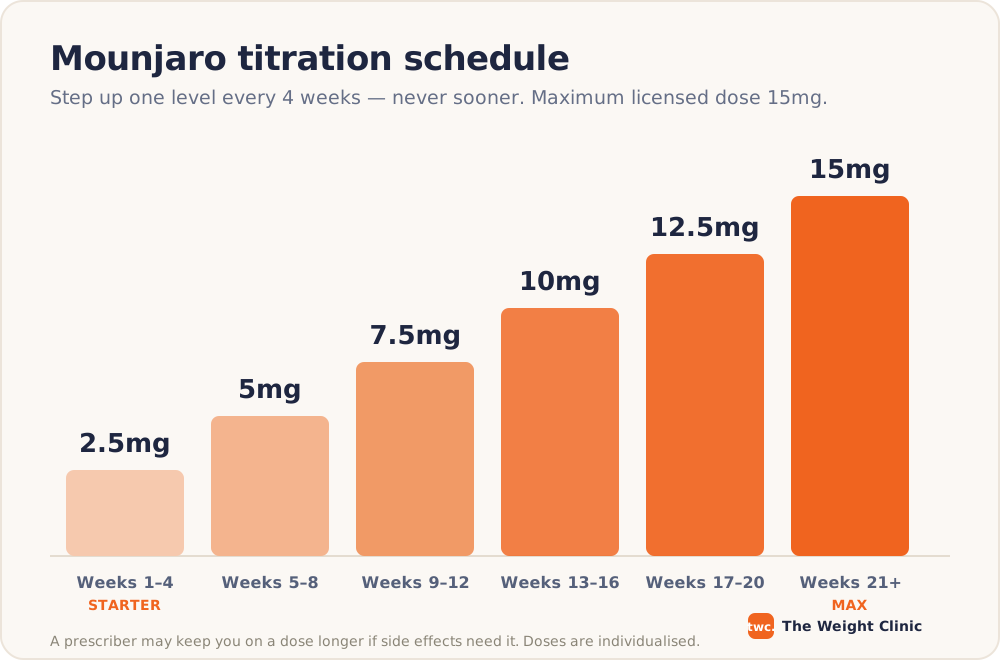
Mounjaro (tirzepatide) is a once-weekly injection, and almost nobody starts on the dose they end up taking. You begin low, at 2.5mg, and step up gradually — usually 2.5mg → 5mg → 7.5mg → 10mg → 12.5mg → 15mg, spending at least four weeks on each step before the next increase. That slow climb is called titration, and it exists for one main reason: to let your gut settle so the medicine is tolerable, not to chase weight loss faster.
This guide walks through the full schedule month by month, explains what each dose is actually for, and covers the practical questions searchers ask most — what a prescriber decides, whether you have to reach 15mg, and what to do if you miss a week. One thing to be clear on from the start: Mounjaro is a prescription-only medicine in the UK. It can only be supplied after an online consultation and a clinical assessment by a prescriber, and the exact dose and pace are their decision, not a fixed formula you self-manage.
The Mounjaro titration schedule at a glance
Mounjaro comes in six pre-filled KwikPen strengths: 2.5mg, 5mg, 7.5mg, 10mg, 12.5mg and 15mg, all injected once a week. The manufacturer's Summary of Product Characteristics (SmPC) sets out the standard escalation: start at 2.5mg once weekly, move to 5mg after four weeks, then increase in 2.5mg steps at a minimum of four weeks apart, up to a maximum of 15mg once weekly.
Here's how that typically plays out over the first several months. Treat this as the textbook path — your prescriber may hold you on a step for longer, so the real timeline is often longer than the minimum shown.
| Step | Weekly dose | Minimum time on this step | What it's for |
|---|---|---|---|
| 1 | 2.5mg | 4 weeks | Starting dose — introduces the medicine gently. Not intended as a weight-loss dose. |
| 2 | 5mg | 4 weeks | First "working" dose; some people see appetite change here. |
| 3 | 7.5mg | 4 weeks | An intermediate step to smooth the climb. |
| 4 | 10mg | 4 weeks | A recognised maintenance option if it's working well and tolerated. |
| 5 | 12.5mg | 4 weeks | Another intermediate step toward the top dose. |
| 6 | 15mg | Ongoing | The maximum dose and a maintenance option. |
Two things worth flagging on this table. First, the 2.5mg, 7.5mg and 12.5mg strengths are best thought of as bridging doses — steps that ease you up the ladder rather than doses you're expected to stay on long-term. In contrast, 5mg, 10mg and 15mg are the whole-strength doses people typically stay on for the longer term; the SmPC lists 5, 10 and 15mg as the recommended maintenance doses. Second, "minimum four weeks" is exactly that: a floor, not a schedule you're obliged to keep to. If you're still queasy at week four, the sensible move is usually to stay put, not push on.
If you're weighing Mounjaro against the alternative, our Mounjaro vs Wegovy comparison breaks down how the two treatments differ on dosing, evidence and cost.
Why you titrate slowly — tolerability, not speed
It's tempting to see the dose ladder as a race to the top, on the assumption that a bigger dose means faster results. That's the wrong way to read it. The gradual increase exists to manage side effects — mainly gastrointestinal ones — so your body has time to adapt at each level.
Tirzepatide works on the GLP-1 and GIP gut hormone pathways, which slow how quickly your stomach empties and dampen appetite. Those same actions are what cause the most common side effects: nausea, diarrhoea, constipation and, less often, vomiting, per the SmPC. Going up too fast tends to make those worse. Going up slowly gives your gut a chance to settle at each step, which is why most people find each increase easier to handle than they feared.
Crucially, a higher number on the pen doesn't automatically mean more weight loss for you personally. In the SURMOUNT-1 trial, participants on 15mg lost about 22.5% of their body weight on average over 72 weeks, compared with about 21.4% on 10mg and 16.0% on 5mg — so higher doses did produce more loss on average across the group. But those are trial averages, not promises. Results vary from person to person, and not everyone reaches these figures. Plenty of people do very well on a middle dose and never need the maximum. The right dose is the lowest one that gives you a good result you can comfortably live with — which is a clinical judgement, not a target to max out. If your main question is how quickly any of this shows up, we cover the realistic timeline in how long Mounjaro takes to work.
What the prescriber decides (and why it isn't automatic)
The four-weeks-per-step schedule is the default, but it's a starting framework, not an autopilot. Whether and when you actually move up is a decision your prescriber makes with you, based on how you're doing. This is where the "prescription-only" part of Mounjaro really matters in practice.
At each review, a prescriber is typically weighing up:
- How you're tolerating the current dose. Ongoing nausea, vomiting or other troublesome side effects are a reason to hold — or occasionally step back down — rather than push on.
- Whether it's working. If your appetite and weight are responding well at, say, 7.5mg or 10mg, there may be no reason to keep climbing. A dose that's doing the job is the right dose.
- Your wider health. Other conditions, other medicines and how your body is responding all feed into the pace.
Before Mounjaro can be prescribed at all, you also have to be clinically appropriate for it. Under the UK licence, a prescriber can consider tirzepatide for weight management at a BMI of 30 or above, or 27 or above if you have a weight-related health condition such as type 2 diabetes, high blood pressure, high cholesterol or obstructive sleep apnoea. (That's the MHRA licence position — it's a different, more permissive threshold than the stricter criteria the NHS uses to decide who it will fund, which is a separate question about eligibility for NHS treatment.) It's worth understanding that eligibility side too — our guide on how to get Mounjaro in the UK covers the consultation and assessment in more detail.
Do you have to reach 15mg?
No. This is one of the most common misconceptions, so it's worth stating plainly: 15mg is the maximum licensed dose, not a finish line everyone is meant to cross. Both 5mg and 10mg are recognised maintenance doses in their own right, and many people settle on one of those long-term.
The goal of titration is to find your effective, tolerable dose. For some that's 15mg; for others it's 10mg, or even lower. If you're losing weight steadily and feeling well on a middle dose, there's often no clinical reason to increase further just because higher pens exist. Equally, some people plateau and, after a review, their prescriber decides a step up is appropriate. Both are normal. What matters is the individual response, assessed at each review — not hitting the top number.
Missed or late doses — the practical rules
Mounjaro is taken once a week, and you can pick any day that suits you — with or without food. Life happens, though, so here's the guidance from the SmPC:
- If you miss a dose, take it as soon as you can, as long as it's within 4 days (96 hours) of the missed day. So if your usual day is Monday and you remember on Wednesday, take it then.
- If more than 4 days have passed, skip the missed dose entirely and take your next dose on your normal scheduled day. Don't double up to make up for it.
- You can change your regular injection day if you need to, provided there are at least 3 days (72 hours) between two doses.
A single missed week is not a crisis and doesn't mean starting the titration ladder again. But if you've been off Mounjaro for longer — a few weeks or more — don't simply resume at your previous dose. Speak to your prescriber first, because after a longer gap they may want to restart you at a lower dose and re-titrate to avoid a rough return of side effects.
As a general point, injections go into the stomach, thigh or upper arm, and you rotate the site each week to protect the skin. If you're ever unsure about a dose, timing or technique, ask your pharmacy team rather than guessing.
Balancing the benefits against the risks
A dose guide wouldn't be complete without the safety picture, because the same mechanism that drives weight loss is what causes side effects.
Common side effects are mostly gastrointestinal and tend to be most noticeable in the days after an increase: nausea, diarrhoea, constipation, vomiting, indigestion and reduced appetite. For most people these ease as the body adapts, and slow titration is precisely the tool used to keep them manageable. Mild dehydration from vomiting or diarrhoea is worth watching for — keep your fluids up.
Serious but rare risks matter too. Tirzepatide has been associated with acute pancreatitis (inflammation of the pancreas) and gallbladder disease such as gallstones (cholelithiasis). Severe, persistent abdominal pain — especially pain that radiates to your back — needs urgent medical attention, as it can be a sign of pancreatitis. The SmPC also flags the risk of low blood sugar (hypoglycaemia) if Mounjaro is combined with certain other diabetes medicines, such as insulin or a sulfonylurea, and cautions around specific existing conditions.
Contraindications and cautions are part of why the assessment exists. Mounjaro isn't suitable for everyone. It shouldn't be used in pregnancy or while breastfeeding; as a class caution it isn't recommended for people with a personal or family history of medullary thyroid carcinoma or the MEN 2 (multiple endocrine neoplasia type 2) syndrome; and it needs care in people with severe gastrointestinal disease (such as severe gastroparesis) or a history of pancreatitis. There are also medicine combinations a prescriber needs to know about. A thorough consultation is designed to catch these before you ever receive a pen — which is another reason the medicine is prescription-only rather than something you can buy off the shelf.
Finally, if you experience a side effect you think may be linked to Mounjaro, you can report it directly to the UK regulator through the MHRA Yellow Card scheme — the "MHRA" here is the Medicines and Healthcare products Regulatory Agency. Reporting helps monitor the safety of medicines for everyone.
How it works at The Weight Clinic
At The Weight Clinic — a GPhC-registered UK online pharmacy — the process is built around this titration logic rather than bolted on afterwards. You start with a free online eligibility check and a clinical consultation. If Mounjaro is appropriate for you, our prescribers (led by Superintendent Pharmacist Andrew Lane and Pharmacist Independent Prescriber Fatma Al Sibahi) start you on 2.5mg and review you at each step before any dose increase, so the pace is matched to how you're actually doing — not a fixed calendar. Mounjaro starts from £160 a month, there's no subscription, and you're reviewed as you go.
If you'd like to know whether treatment could be suitable for you, you can check your eligibility in a few minutes — it's free, and there's no obligation to go ahead. You can also read more about Mounjaro and browse all our weight-loss injections and wider treatments, including Wegovy and the newer oral option, the Wegovy pill.
Frequently asked questions
How long does it take to get to the 15mg dose of Mounjaro?
If you moved up at the minimum four-week interval at every step, reaching 15mg would take at least 20 weeks — around five months — from your 2.5mg start. In practice it's often longer, because prescribers frequently hold people on a dose for longer to manage side effects or because a lower dose is already working well. Many people also never need to reach 15mg at all.
Can I start Mounjaro on a higher dose to lose weight faster?
No. Everyone starts at 2.5mg regardless of goals, because the low starting dose is about letting your gut tolerate the medicine, not about how much weight you want to lose. Starting high would sharply increase the risk of severe nausea and vomiting without a proportional benefit. The dose is escalated gradually under prescriber supervision.
What happens if I miss my weekly Mounjaro injection?
If it's within 4 days (96 hours) of your usual day, take it as soon as you remember. If more than 4 days have passed, skip that dose and take the next one on your normal day — don't double up. If you've missed several weeks, don't just resume your old dose; contact your prescriber, as you may need to restart lower and re-titrate.
Do I have to keep increasing the dose every month?
No. The four-week intervals are a minimum, not a schedule you're obliged to follow. If a dose is working well and you feel good, your prescriber may keep you there. Both 5mg and 10mg are recognised maintenance doses, so plenty of people stay on a middle dose long-term rather than climbing to 15mg.
Is a higher Mounjaro dose always more effective?
On average across the SURMOUNT-1 trial, higher doses produced more weight loss (about 22.5% at 15mg versus 16.0% at 5mg over 72 weeks). But those are group averages — individual results vary, and not everyone reaches those figures. The best dose for you is the lowest one that gives a good result you can tolerate comfortably, which is a clinical decision made at review.
Can I buy Mounjaro without a consultation?
No. Mounjaro is a prescription-only medicine in the UK. It can only be supplied after an online consultation and a clinical assessment by a prescriber, who confirms it's appropriate for you and decides your starting dose and titration plan. Any service offering it without an assessment is not operating safely or legally.
Frequently asked questions
How long does it take to get to the 15mg dose of Mounjaro?
If you moved up at the minimum four-week interval at every step, reaching 15mg would take at least 20 weeks — around five months — from your 2.5mg start. In practice it's often longer, because prescribers frequently hold people on a dose for longer to manage side effects or because a lower dose is already working well. Many people also never need to reach 15mg at all.
Can I start Mounjaro on a higher dose to lose weight faster?
No. Everyone starts at 2.5mg regardless of goals, because the low starting dose is about letting your gut tolerate the medicine, not about how much weight you want to lose. Starting high would sharply increase the risk of severe nausea and vomiting without a proportional benefit. The dose is escalated gradually under prescriber supervision.
What happens if I miss my weekly Mounjaro injection?
If it's within 4 days (96 hours) of your usual day, take it as soon as you remember. If more than 4 days have passed, skip that dose and take the next one on your normal day — don't double up. If you've missed several weeks, don't just resume your old dose; contact your prescriber, as you may need to restart lower and re-titrate.
Do I have to keep increasing the dose every month?
No. The four-week intervals are a minimum, not a schedule you're obliged to follow. If a dose is working well and you feel good, your prescriber may keep you there. Both 5mg and 10mg are recognised maintenance doses, so plenty of people stay on a middle dose long-term rather than climbing to 15mg.
Is a higher Mounjaro dose always more effective?
On average across the SURMOUNT-1 trial, higher doses produced more weight loss (about 22.5% at 15mg versus 16.0% at 5mg over 72 weeks). But those are group averages — individual results vary, and not everyone reaches those figures. The best dose for you is the lowest one that gives a good result you can tolerate comfortably, which is a clinical decision made at review.
Can I buy Mounjaro without a consultation?
No. Mounjaro is a prescription-only medicine in the UK. It can only be supplied after an online consultation and a clinical assessment by a prescriber, who confirms it's appropriate for you and decides your starting dose and titration plan. Any service offering it without an assessment is not operating safely or legally.