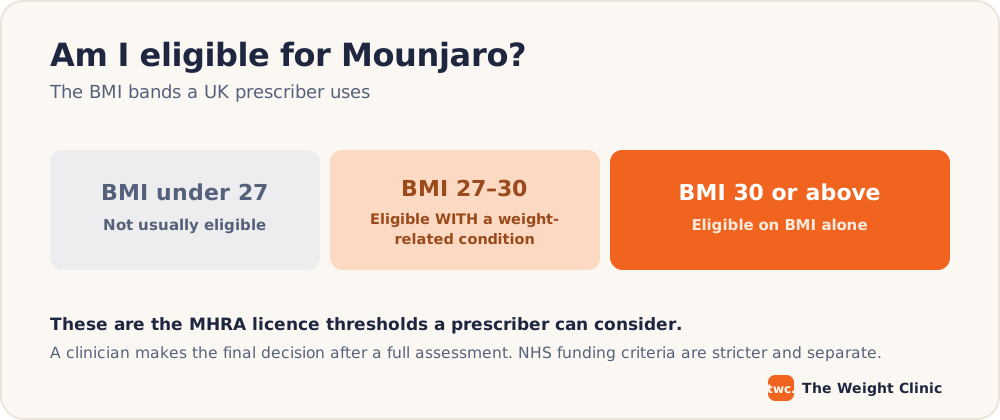
The short answer most people are looking for: in the UK, a prescriber can consider Mounjaro (tirzepatide) if your BMI is 30 or above, or 27 or above when you also have a weight-related health condition such as type 2 diabetes, high blood pressure or sleep apnoea. You also need to be an adult, and free of the specific medical reasons the medicine's licence says it should be avoided.
That is the headline. But "eligible" is doing a lot of work in that sentence, and it is worth unpacking, because two different sets of rules float around online and they get muddled constantly. There are the licence thresholds a private prescriber uses, and there are the much stricter criteria the NHS uses to decide who it will fund. They are not the same thing, and confusing them is the single biggest reason people either wrongly assume they don't qualify or wrongly assume the NHS will pay.
This guide walks through exactly how eligibility is assessed: how BMI is worked out (with a real example), what counts as a weight-related condition, who should not take Mounjaro at all, and how an online pharmacy like The Weight Clinic checks all of this before anything is prescribed. Nothing here is a substitute for a proper clinical assessment — but it should tell you, honestly, whether it is worth having that conversation.
The BMI threshold: what the Mounjaro licence actually says
Mounjaro is licensed in the UK for weight management as an addition to a reduced-calorie diet and more physical activity. The Summary of Product Characteristics — the official prescribing document approved by the UK medicines regulator, the Medicines and Healthcare products Regulatory Agency (MHRA) — sets out the body-mass-index range within which a prescriber can consider it:
- BMI of 30 kg/m² or above (classified as obesity), or
- BMI of 27 kg/m² to under 30 kg/m² (classified as overweight) when you also have at least one weight-related health problem.
That second line is the one people miss. You do not have to be in the "obese" category to be eligible. If your BMI sits in the 27–29.9 range and you have a condition that is driven or worsened by weight, a prescriber can still consider treatment under the licence.
This is a licence threshold, not an entitlement. Meeting the BMI number means treatment can be considered — it does not mean it will automatically be prescribed. A prescriber still weighs up your full history, your other medicines, and whether the benefits outweigh the risks for you specifically. Eligibility opens the door; the clinical judgement decides whether you walk through it.
How to calculate your BMI (with a worked example)
BMI is your weight in kilograms divided by your height in metres squared. The formula looks fiddlier than it is:
BMI = weight (kg) ÷ [height (m) × height (m)]
Take a worked example. Someone who is 1.68 m tall and weighs 82 kg:
- Square the height: 1.68 × 1.68 = 2.82
- Divide the weight by that: 82 ÷ 2.82 = 29.1
A BMI of 29.1 falls in the overweight band (27–29.9). On its own that is below the 30 obesity threshold — so this person would need a weight-related health condition to be eligible under the licence. Add, say, well-documented high blood pressure, and a prescriber could consider treatment.
If you think in stones and pounds, convert first: 1 stone is 6.35 kg, 1 pound is 0.45 kg. So 12 stone 12 lb is (12 × 6.35) + (12 × 0.45) = 76.2 + 5.4 = 81.6 kg — near enough the example above.
A couple of honest caveats about BMI. It is a population screening tool, not a precise measure of health. It does not distinguish muscle from fat, so a very muscular person can read as "overweight" without carrying excess fat. It can also under- or over-estimate risk depending on ethnicity — for people of South Asian, Chinese, Black African and some other backgrounds, weight-related health risks appear at lower BMIs, which is why lower thresholds are sometimes applied. A good assessment takes the number as a starting point, not the final word.
What counts as a "weight-related health condition"?
If your BMI is between 27 and 30, eligibility hinges on having a qualifying comorbidity — a health problem linked to carrying excess weight. Common examples a prescriber will recognise include:
- Type 2 diabetes or prediabetes (raised blood sugar not yet at diabetic levels)
- High blood pressure (hypertension)
- High cholesterol or other dyslipidaemia
- Obstructive sleep apnoea
- Non-alcoholic fatty liver disease
- Osteoarthritis, particularly of weight-bearing joints
- Polycystic ovary syndrome (PCOS)
- Cardiovascular disease
This is not an exhaustive list, and one condition is enough — you do not need several. What matters is that it is a genuine, ideally documented, diagnosis rather than a suspicion. During an online assessment you will be asked about your medical history and current medicines, and honesty here is not box-ticking: it is how the prescriber judges whether Mounjaro is safe and appropriate for you, not just permissible.
Licence thresholds vs NHS funding: the distinction that trips everyone up
Here is the confusion that sends people in circles. When you read that Mounjaro is only for people with a BMI of 35 or 40 "and four health conditions," you are reading the NHS rollout criteria, not the licence.
The NHS is rolling Mounjaro out gradually through primary care and has deliberately set a high bar at the start, prioritising those with the greatest need — broadly, higher BMI thresholds combined with multiple weight-related conditions, phased in over several years. That is a rationing and funding decision about who the NHS will pay for and when. It reflects budget and capacity, not the medicine's licensed use.
A private prescriber works to the licence — BMI 30+, or 27+ with a weight-related condition. So it is entirely possible, and very common, to be eligible for Mounjaro privately while not yet qualifying for it on the NHS. Neither route is "the real one"; they answer different questions. The NHS asks who do we fund first. The licence asks for whom is this medicine appropriate and safe. If you want the full picture on accessing it privately, our guide on how to get Mounjaro in the UK walks through the practical steps.
Who should NOT take Mounjaro
Meeting the BMI criteria is only half the picture. Some people should not take Mounjaro regardless of their weight, and a responsible assessment screens for these before anything is prescribed. You should not take it if any of the following apply:
- You are allergic to tirzepatide or any of the other ingredients.
- You are pregnant, trying to conceive, or breastfeeding. Mounjaro is not recommended in pregnancy, and it is advised to stop it and switch to another approach if you are planning a pregnancy. Because it may reduce how well the contraceptive pill is absorbed, people using oral contraception are advised to add a barrier method (such as condoms) for a period after starting or increasing the dose.
- You have a personal or family history of medullary thyroid cancer, or the condition MEN 2 (multiple endocrine neoplasia type 2).
- You have had pancreatitis (inflammation of the pancreas).
- You have type 1 diabetes — Mounjaro is not for treating this.
Extra caution — not an automatic no, but careful clinical judgement — applies if you have significant kidney disease, severe gastrointestinal disease such as gastroparesis, a history of gallstones, diabetic eye disease (retinopathy), or a history of an eating disorder. It is also generally assessed in adults up to around 75, with individual judgement at the upper end. This is exactly why Mounjaro is a prescription-only medicine and why it is supplied only after a proper consultation — a checklist alone cannot catch the interactions and history that a prescriber can.
What results are realistic — and why the trials matter
It is fair to want a sense of what "working" looks like before you decide whether eligibility is worth pursuing. The evidence for tirzepatide comes from the SURMOUNT-1 trial: over 72 weeks, adults without diabetes taking the highest 15 mg dose lost, on average, about 22.5% of their body weight, alongside a reduced-calorie diet and increased activity. For context, semaglutide (Wegovy) produced an average of around 14.9% over 68 weeks in its STEP-1 trial.
Two things to hold in mind. First, those are averages from a trial — results vary, and not everyone reaches them; some people lose considerably more, others less. Second, that weight loss went hand-in-hand with diet and activity changes, not instead of them. The medicine reduces appetite and helps you eat less; it does not do the whole job by itself. Our comparison of Mounjaro vs Wegovy goes deeper on how the two stack up, and how long Mounjaro takes to work sets out a realistic timeline.
The Mounjaro titration schedule
If you are prescribed Mounjaro, you do not start at a full dose. It is titrated — stepped up gradually — to let your body adjust and to keep side effects manageable. Under the licensed schedule, the dose is increased in 2.5 mg steps, no sooner than every 4 weeks, until you reach an effective dose you tolerate. A typical path looks like this:
| Phase | Weekly dose | Minimum duration |
|---|---|---|
| Starting dose | 2.5 mg | 4 weeks |
| First step up | 5 mg | 4 weeks |
| Optional maintenance | 5 mg | ongoing |
| Further steps (if needed) | 7.5 mg → 10 mg → 12.5 mg → 15 mg | at least 4 weeks per step |
| Maximum dose | 15 mg | ongoing |
The 2.5 mg starting dose is there to ease you in, not to drive weight loss on its own. Many people settle on a maintenance dose below the 15 mg maximum — the aim is the lowest dose that works for you, not the highest possible one. Your prescriber decides each step based on how you are responding and tolerating it, which is why treatment is reviewed rather than left on autopilot.
Common and serious side effects to weigh up
Being eligible does not mean being side-effect-free. Most side effects are gastrointestinal, usually mildest at the start and after each dose increase, and they tend to ease with time. The most common include:
- Nausea
- Diarrhoea
- Constipation
- Vomiting
- Indigestion and abdominal discomfort
- Reduced appetite (part of how it works, but worth flagging if it becomes hard to eat or drink enough)
Eating smaller portions, avoiding very rich or fatty meals, and staying hydrated all help. Persistent vomiting or diarrhoea can cause dehydration, which in turn can strain the kidneys — so tell your prescriber if it does not settle.
Rarer but more serious risks deserve genuine attention. Pancreatitis (inflammation of the pancreas) is uncommon but important: severe, persistent stomach pain that may spread to your back, often with vomiting, needs urgent medical help, and you should stop the medicine. Gallbladder problems, including gallstones, can occur, sometimes linked to rapid weight loss — watch for pain in the upper-right abdomen, yellowing of the skin or eyes, or fever. There is also a low risk of hypoglycaemia (low blood sugar), mainly if you take Mounjaro alongside insulin or a sulfonylurea for diabetes, which is one reason your full medication list matters.
If you experience a side effect, you can report it directly through the MHRA Yellow Card scheme at yellowcard.mhra.gov.uk — reporting helps the Medicines and Healthcare products Regulatory Agency monitor the safety of medicines for everyone. Alcohol is a common question too; we cover it separately in can you drink alcohol on Mounjaro.
How eligibility works at The Weight Clinic
The Weight Clinic is a GPhC-registered UK online pharmacy, so eligibility is assessed by regulated clinicians — not by a form that simply lets anyone through. The process is straightforward and free to start:
- You complete a free online eligibility check and medical questionnaire. This captures your height and weight (so BMI is calculated for you), your medical history, current medicines, and any of the conditions or contraindications above.
- A prescriber reviews your answers. Our clinical team — including Superintendent Pharmacist Andrew Lane and Pharmacist Independent Prescriber Fatma Al Sibahi — checks that Mounjaro is both appropriate and safe for you against the licence and your history, not just whether a BMI number is met.
- If it is suitable, treatment is prescribed and dispensed, with clear guidance on how to use it and what to watch for. If it is not suitable, you will be told why — and, where relevant, what other options might fit, such as Wegovy or the oral semaglutide pill.
There is no subscription and no obligation to continue. Mounjaro starts from £160 a month, and the eligibility check itself costs nothing.
Checking your eligibility is genuinely the fastest way to get a clear, personal answer rather than guessing from BMI charts. Start your free eligibility check and a prescriber will review whether Mounjaro is right for you.
Frequently asked questions
Can I get Mounjaro with a BMI of 27?
Yes, potentially — but only if you also have a weight-related health condition such as type 2 diabetes, high blood pressure, high cholesterol or sleep apnoea. At a BMI between 27 and 30 without any such condition, you would fall outside the licensed threshold, and a prescriber could not consider it under the current licence. With a qualifying condition, treatment can be considered.
Do I qualify for Mounjaro on the NHS?
The NHS uses much stricter criteria than the medicine's licence and is rolling access out in phases, prioritising people with higher BMIs and several weight-related conditions. Many people who are eligible for Mounjaro privately do not yet meet the NHS threshold. If you want to know about NHS access specifically, speak to your GP — the private route follows the licence, which is a lower bar.
What BMI do I need for Mounjaro?
Under the UK licence, a prescriber can consider Mounjaro at a BMI of 30 or above, or 27 or above if you have a weight-related health condition. BMI is your weight in kilograms divided by your height in metres squared. You can work it out yourself, but any assessment will calculate it for you from your height and weight.
Can I take Mounjaro if I'm trying to get pregnant?
No. Mounjaro is not recommended in pregnancy or while breastfeeding, and it is advised to stop it and use a different approach if you are planning to conceive. It may also reduce how well the oral contraceptive pill works, so if you use the pill you may be advised to add a barrier method of contraception. Always tell your prescriber if pregnancy is a possibility.
Is Mounjaro available without a prescription?
No. Mounjaro is a prescription-only medicine and cannot legally be supplied without one. It can only be provided after an online consultation and clinical assessment by a prescriber, who confirms you meet the eligibility criteria and have no contraindications. Anywhere offering it without any of that should be treated with real caution.
How much weight can I expect to lose on Mounjaro?
In the SURMOUNT-1 trial, adults on the highest 15 mg dose lost an average of about 22.5% of their body weight over 72 weeks, alongside diet and activity changes. That is a trial average, not a promise — results vary, and not everyone reaches that figure. The medicine works best as part of a wider change to how you eat and move, not on its own.
This article is for general information and is not personal medical advice. Whether Mounjaro is right for you can only be decided by a prescriber after a full assessment. If you are eligible, treatment is prescribed and supplied only following an online consultation.
Frequently asked questions
Can I get Mounjaro with a BMI of 27?
Yes, potentially — but only if you also have a weight-related health condition such as type 2 diabetes, high blood pressure, high cholesterol or sleep apnoea. At a BMI between 27 and 30 without any such condition, you would fall outside the licensed threshold, and a prescriber could not consider it under the current licence. With a qualifying condition, treatment can be considered.
Do I qualify for Mounjaro on the NHS?
The NHS uses much stricter criteria than the medicine's licence and is rolling access out in phases, prioritising people with higher BMIs and several weight-related conditions. Many people who are eligible for Mounjaro privately do not yet meet the NHS threshold. If you want to know about NHS access specifically, speak to your GP — the private route follows the licence, which is a lower bar.
What BMI do I need for Mounjaro?
Under the UK licence, a prescriber can consider Mounjaro at a BMI of 30 or above, or 27 or above if you have a weight-related health condition. BMI is your weight in kilograms divided by your height in metres squared. You can work it out yourself, but any assessment will calculate it for you from your height and weight.
Can I take Mounjaro if I'm trying to get pregnant?
No. Mounjaro is not recommended in pregnancy or while breastfeeding, and it is advised to stop it and use a different approach if you are planning to conceive. It may also reduce how well the oral contraceptive pill works, so if you use the pill you may be advised to add a barrier method of contraception. Always tell your prescriber if pregnancy is a possibility.
Is Mounjaro available without a prescription?
No. Mounjaro is a prescription-only medicine and cannot legally be supplied without one. It can only be provided after an online consultation and clinical assessment by a prescriber, who confirms you meet the eligibility criteria and have no contraindications. Anywhere offering it without any of that should be treated with real caution.
How much weight can I expect to lose on Mounjaro?
In the SURMOUNT-1 trial, adults on the highest 15 mg dose lost an average of about 22.5% of their body weight over 72 weeks, alongside diet and activity changes. That is a trial average, not a promise — results vary, and not everyone reaches that figure. The medicine works best as part of a wider change to how you eat and move, not on its own.