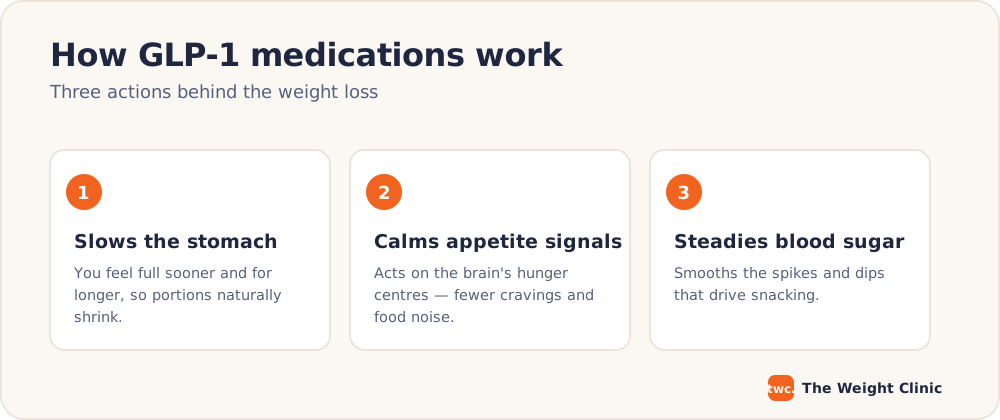
If you have read anything about weight-loss medicine in the last couple of years, you have probably seen the letters "GLP-1" without ever being told plainly what they mean. Here is the short version: GLP-1 stands for glucagon-like peptide-1, a hormone your own gut releases after you eat. It tells your brain you are full, slows how fast your stomach empties, and helps steady your blood sugar. The medicines everyone is talking about — Wegovy, Mounjaro, and the newer oral options — work by mimicking that hormone. That is the whole idea in one sentence.
Everything else in this article unpacks that idea properly: how these medicines actually change your appetite, how the main options differ, who they are licensed for, and where the real risks sit. They are prescription-only medicines, supplied only after an online consultation and clinical assessment by a prescriber — never something you can buy off a shelf — and results vary from person to person. With that framing set, let's start with the biology.
What does GLP-1 actually do in the body?
GLP-1 is one of several hormones your gut and pancreas use to manage hunger, fullness, and how you handle the energy in a meal. It is released within minutes of eating and does three main jobs. It signals fullness to a region of the brain called the hypothalamus, so you feel satisfied sooner. It slows gastric emptying, meaning food lingers in your stomach and that satisfied feeling lasts longer. And it prompts the pancreas to release insulin in response to rising blood sugar, which is why the same family of drugs was first developed for type 2 diabetes.
The important word is agonist. The medicines are "GLP-1 receptor agonists" — they don't top up your natural hormone by a little, they switch on the same receptors at a steady, pharmacologically active level, week after week. That sustained signal is what separates a medicine from the brief pulse of GLP-1 you get from a normal meal.
Many people describe the effect in the same way once treatment settles: the constant background pull toward food quietens. That pull has a nickname — "food noise" — and it is not greed or a lack of discipline. It is a physiological signal doing its job too loudly. When it eases, smaller portions stop feeling like deprivation and start feeling like enough.
Why does this work when dieting alone often doesn't?
It helps to understand what your body does when you simply eat less. Cutting calories triggers a defensive response that is well documented. Hunger hormones rise, fullness signals fade, and resting energy expenditure drifts down. In a landmark study, appetite-related hormones in people who had lost weight stayed shifted toward hunger for at least a year after the diet ended (Sumithran et al., New England Journal of Medicine, 2011). That is why the second and third attempt at the same diet usually feel harder than the first.
GLP-1 medicines act on the appetite system itself rather than asking willpower to out-argue it. They don't burn fat directly and they don't "boost your metabolism" in the way old diet-pill adverts promised. What they do is turn down the drive to overeat, so eating less stops being a daily fight. That is a meaningful distinction: the weight change follows from a genuinely reduced appetite, not from any fat-dissolving effect.
The GLP-1 family: single-action, dual-action, and oral options
Not every GLP-1 medicine is the same. They differ in which receptors they target and in how you take them. The three points people most often ask about are the mechanism, the delivery, and the average result seen in the main trial for each drug.
| Wegovy (semaglutide) | Mounjaro (tirzepatide) | Oral options | |
|---|---|---|---|
| Active ingredient | Semaglutide | Tirzepatide | Semaglutide (oral); orforglipron (Foundayo, MHRA-authorised Aug 2026 — supplied by us) |
| Receptor target | GLP-1 only | GLP-1 and GIP (dual-action) | GLP-1 |
| How it's taken | Weekly injection (oral tablet route also exists) | Weekly injection | Daily tablet |
| Headline trial result | ~14.9% average weight loss over 68 weeks (STEP-1, 2.4 mg) | up to ~22.5% weight loss over 72 weeks (SURMOUNT-1, 15 mg) | Varies by drug; still emerging |
A few things are worth pulling out of that table.
Semaglutide (the active ingredient in Wegovy) targets the GLP-1 receptor alone. In the STEP-1 trial, adults taking semaglutide 2.4 mg lost an average of 14.9% of their body weight over 68 weeks, against 2.4% on placebo, alongside diet and activity support (STEP-1, New England Journal of Medicine, 2021).
Tirzepatide (the active ingredient in Mounjaro) is a dual-action medicine. It targets GLP-1 and a second gut hormone, GIP (glucose-dependent insulinotropic polypeptide). In the SURMOUNT-1 trial, participants on the 15 mg dose lost up to around 22.5% of their body weight over 72 weeks (SURMOUNT-1, New England Journal of Medicine, 2022). Hitting two receptors instead of one is the reason it tends to produce larger average weight loss in trials.
Those numbers are trial averages achieved under close supervision with lifestyle support — not a promise of what any one person will lose. Your own result depends on your dose, how your body responds, and the habits you build alongside treatment, which is why we never quote a figure as a guarantee. If you want the full head-to-head, our Mounjaro guide and Wegovy page go deeper on each.
The picture is also broadening beyond injections. An oral form of semaglutide already exists, and a non-peptide daily tablet, orforglipron — which we cover on our Foundayo page and in our Wegovy Tablet explainer — was authorised by the MHRA in August 2026 for weight management, and we now supply it. Injections remain the most established option, but a tablet is a genuine draw for anyone who dislikes needles.
Is a "stronger" GLP-1 always the better choice?
It is tempting to read the table above and conclude that the drug with the biggest number is simply the best. That is the wrong way to choose. The right medicine is the one that fits your health history, your other conditions and medications, and how your body tolerates it. Someone with a lower starting BMI, a particular side-effect profile, or a preference for a tablet over an injection may be better served by a different option than the one with the highest headline figure.
This is exactly the judgement a prescriber makes during your assessment. It is not about reaching for the strongest tool on the shelf; it is about matching the mechanism to the person. Two people with the same weight can quite reasonably end up on different treatments.
Who are GLP-1 medicines licensed for in the UK?
In the UK these are prescription-only medicines with a defined licensed population. Under the marketing authorisation approved by the Medicines and Healthcare products Regulatory Agency (MHRA), treatment is generally appropriate for adults with a BMI of 30 or more, or a BMI of 27 or more together with a weight-related health condition such as high blood pressure, type 2 diabetes, or raised cholesterol (MHRA guidance on GLP-1 medicines).
Two points often cause confusion. First, those licensing thresholds are broader than the specific, tightly rationed cohorts the NHS currently funds — NHS access is being rolled out in phases, which is one reason many people look to regulated private care to start sooner. Second, BMI is a screening tool, not the whole story. For people from South Asian, Chinese, Middle Eastern, Black African, and African-Caribbean backgrounds, health risks can appear at a lower BMI, and a clinical review takes that into account. Whichever route you take, eligibility has to be confirmed by an assessment; a legitimate provider will not skip that step. Our eligibility explainer covers the criteria in more detail.
How doses are built up: the titration principle
You do not start GLP-1 treatment at full strength, and there is a good reason for that. Beginning low and increasing slowly gives your body time to adjust and keeps side effects to a minimum.
Mounjaro is a clear example. Treatment starts at 2.5 mg once a week, and the dose is increased by 2.5 mg at a time, no sooner than every four weeks, up to a maximum of 15 mg. Not everyone climbs to the top of that ladder — the aim is the lowest dose that works well for you, not the highest number you can reach. Wegovy follows the same gradual principle from its own low starting dose. Rushing this process tends to buy you more nausea, not faster results.
Safety: the balanced picture
No effective medicine is without risk, and being straight about that is part of good care.
The most common side effects are gastrointestinal — nausea, diarrhoea, constipation, and sometimes vomiting. They are usually mildest at the start, tend to appear around dose increases, and often settle as your body adapts. Slow titration exists specifically to reduce them, and simple measures — smaller protein-forward meals, staying hydrated, easing off very fatty food — help a lot.
Less common but more serious risks deserve real attention:
- Acute pancreatitis. In 2026 the MHRA strengthened its warnings on GLP-1 and dual GLP-1/GIP medicines, flagging rare reports of severe pancreatitis, including necrotising and fatal cases. The warning sign to act on is severe, persistent stomach pain that may spread to your back, sometimes with vomiting; if that happens, stop the medicine and seek urgent medical help (MHRA Drug Safety Update, 2026).
- Gallbladder problems, including gallstones, which become more likely with rapid weight loss. The signs to watch for are pain in the upper right side of your abdomen, fever, or yellowing of the skin or eyes, and they should be checked promptly.
There are also firm contraindications. These medicines are not suitable in pregnancy or while breastfeeding. A personal or family history of medullary thyroid cancer, or the condition MEN 2 (multiple endocrine neoplasia type 2), is a reason not to use them, as is a history of pancreatitis. Tirzepatide can also reduce the effectiveness of the combined oral contraceptive pill, so backup contraception may be needed for a while. This is precisely why the consultation asks detailed questions about your history rather than treating the form as a formality — and why a genuine prescriber will decline to treat when the medicine is not safe for you.
If you ever experience a side effect, you can and should report it directly through the MHRA's Yellow Card scheme, which is how real-world safety signals are gathered and warnings updated. Reporting a suspected reaction — even a mild or uncertain one — genuinely helps make these medicines safer for everyone. Our fuller write-ups on the Mounjaro treatment page and on staying safe with weight-loss injections go further if you want them.
Do you have to take them forever, and what if you stop?
It is fair to be honest here. Obesity behaves like a chronic condition, and GLP-1 medicines manage it rather than cure it. Because they work by suppressing appetite, that appetite tends to return when you stop, and some weight regain is common — this was seen when treatment was withdrawn in trial extensions. That does not make the medicine a trap; it makes it a tool. Used alongside genuine changes to how you eat and move, it buys you the space to build habits that help hold your result, and any decision to pause, taper, or continue is one to make with your prescriber rather than alone.
How it works at The Weight Clinic
The Weight Clinic is a GPhC-registered UK online pharmacy, with care overseen by our clinical team — Superintendent Pharmacist Andrew Lane, Pharmacist Independent Prescriber Fatma Al Sibahi, and content reviewed by Pharmacist Independent Prescriber Ali Al Sibahi. That registration is the line between medical care and an internet transaction.
The process is deliberately simple. You complete a free eligibility check and a clinical questionnaire covering your health history. A prescriber reviews it. If treatment is appropriate, it is prescribed and dispensed by our pharmacy and delivered discreetly to your door; if it is not the right or safe choice for you, we tell you — that is the point of a clinical review. There is no subscription and no lock-in. Mounjaro starts from £160 a month, and Wegovy from £115 a month, plus £5 tracked delivery per order.
Ready to see where you stand? You can check your eligibility in a few minutes, with no obligation to go ahead. If you would rather read more first, our overview of prescription weight-loss treatments and our guide to weight-loss injections are good next steps.
The bottom line
GLP-1 medicines are not "skinny jabs" or lifestyle shortcuts, and understanding them starts with understanding the hormone they copy. GLP-1 promotes fullness, slows the stomach, and helps regulate blood sugar; the medicines sustain that signal so the drive to overeat quietens. Semaglutide targets one receptor, tirzepatide targets two, and oral options are widening the choice — but all of them are prescription medicines with real risks, suited to a defined group of people, and most effective alongside good food and honest expectations. Seen clearly, the question is not which drug is strongest, but whether one of them is right for you — and that is a question worth answering with a proper assessment rather than a guess.
Frequently asked questions
What does GLP-1 stand for, in plain English? GLP-1 is short for glucagon-like peptide-1, a hormone your gut releases after eating. It tells your brain you are full, slows how quickly your stomach empties, and helps control blood sugar. The weight-loss medicines called GLP-1 receptor agonists work by mimicking this hormone at a steady, active level, which is what quietens appetite over the course of a week.
Are Wegovy and Mounjaro both GLP-1 medicines? Yes, though they are not identical. Wegovy contains semaglutide, which acts on the GLP-1 receptor alone. Mounjaro contains tirzepatide, which acts on both the GLP-1 and GIP receptors — a dual-action approach. Both are weekly injections, and both are prescription-only after a clinical assessment. The dual mechanism is why tirzepatide tends to produce larger average weight loss in trials.
How much weight do GLP-1 medicines cause people to lose? In their main trials, semaglutide 2.4 mg produced an average of about 14.9% body-weight loss over 68 weeks (STEP-1), and tirzepatide 15 mg produced up to around 22.5% over 72 weeks (SURMOUNT-1), both alongside lifestyle support. Those are trial averages, not guarantees. Your own result depends on your dose, how your body responds, and the habits you keep, and results vary between individuals.
Are GLP-1 medicines safe? For suitable patients taking them under prescriber supervision, they have a well-studied safety profile, but no effective medicine is risk-free. Common side effects are gastrointestinal and usually settle. Rarer but serious risks include acute pancreatitis and gallbladder problems, and there are important contraindications such as pregnancy, a history of pancreatitis, or a personal or family history of medullary thyroid cancer, which is why a clinical assessment comes first. Any side effect can be reported to the MHRA via the Yellow Card scheme at yellowcard.mhra.gov.uk.
Can I buy GLP-1 medicines without a prescription? No. In the UK these are prescription-only medicines, supplied only after an online consultation and clinical review by a prescriber. Any website offering to sell them with no medical assessment is not operating legally or safely. A genuine pharmacy will always confirm your eligibility, check your medical history for contraindications, and only prescribe if the treatment is appropriate for you.
Do I have to inject, or is there a tablet? An oral form of semaglutide already exists, and a non-peptide daily tablet, orforglipron (Foundayo), was authorised by the MHRA in August 2026 for weight management, and we now supply it. Injections remain the most established route and currently show the largest trial results, but a tablet can be a good fit if needles are a barrier. Which format suits you is part of the conversation during your assessment.
Frequently asked questions
What does GLP-1 stand for, in plain English?
GLP-1 is short for glucagon-like peptide-1, a hormone your gut releases after eating. It tells your brain you are full, slows how quickly your stomach empties, and helps control blood sugar. The weight-loss medicines called GLP-1 receptor agonists work by mimicking this hormone at a steady, active level, which is what quietens appetite over the course of a week.
Are Wegovy and Mounjaro both GLP-1 medicines?
Yes, though they are not identical. Wegovy contains semaglutide, which acts on the GLP-1 receptor alone. Mounjaro contains tirzepatide, which acts on both the GLP-1 and GIP receptors — a dual-action approach. Both are weekly injections, and both are prescription-only after a clinical assessment. The dual mechanism is why tirzepatide tends to produce larger average weight loss in trials.
How much weight do GLP-1 medicines cause people to lose?
In their main trials, semaglutide 2.4 mg produced an average of about 14.9% body-weight loss over 68 weeks (STEP-1), and tirzepatide 15 mg produced up to around 22.5% over 72 weeks (SURMOUNT-1), both alongside lifestyle support. Those are trial averages, not guarantees. Your own result depends on your dose, how your body responds, and the habits you keep, and results vary between individuals.
Are GLP-1 medicines safe?
For suitable patients taking them under prescriber supervision, they have a well-studied safety profile, but no effective medicine is risk-free. Common side effects are gastrointestinal and usually settle. Rarer but serious risks include acute pancreatitis and gallbladder problems, and there are important contraindications such as pregnancy, a history of pancreatitis, or a personal or family history of medullary thyroid cancer, which is why a clinical assessment comes first. Any side effect can be reported to the MHRA via the Yellow Card scheme at yellowcard.mhra.gov.uk.
Can I buy GLP-1 medicines without a prescription?
No. In the UK these are prescription-only medicines, supplied only after an online consultation and clinical review by a prescriber. Any website offering to sell them with no medical assessment is not operating legally or safely. A genuine pharmacy will always confirm your eligibility, check your medical history for contraindications, and only prescribe if the treatment is appropriate for you.
Do I have to inject, or is there a tablet?
An oral form of semaglutide already exists, and a non-peptide daily tablet, orforglipron (Foundayo), was authorised by the MHRA in August 2026 for weight management, and we now supply it. Injections remain the most established route and currently show the largest trial results, but a tablet can be a good fit if needles are a barrier. Which format suits you is part of the conversation during your assessment.